
Dunwoody Root Zone Calculation for TPZ Fencing Compliance Guide
Perimeter Site Fence provides precise Root Zone Calculation for TPZ Fencing to ensure construction compliance across Dunwoody, GA. From historic Dunwoody Village to upscale Kingswood, we help contractors protect vital root systems near landmarks like the Spruill Center for the Arts. Our expertise ensures your fencing layout respects local arboricultural standards, preventing costly municipal fines and protecting Dunwoody's unique pre-1920 landscape and vegetation.
Understanding Tree Protection Zone Root Calculations
When we're protecting trees during construction, root zone calculations aren't just technical — they're about preserving living ecosystems. Our tree protection zone approach starts with understanding each tree's unique biological infrastructure. We map critical root radii precisely, ensuring minimal disruption to established root networks in sensitive areas like Dunwoody Village. Our crew uses specialized measurement techniques that go beyond basic perimeter marking, analyzing soil composition and root spread to create truly protective boundaries.
Calculation Steps
- Verify tree species and root zone diameter
- Measure critical root radius from trunk center
- Confirm minimum TPZ fencing dimensions
- Assess soil compaction potential
- Document existing root structure before installation
| Root Zone Factor | Measurement Criteria |
|---|---|
| Critical Root Radius | Trunk Diameter x 12 |
| Minimum Protection Area | Drip Line Radius |
| Soil Compaction Limit | <85% Original Density |
Root Zone Calculation for TPZ Fencing in Dunwoody: Practical Compliance Steps
Root Zone Calculation is a quantitative assessment method that establishes the mandatory protective radius around trees on construction sites. This mandatory protective radius defines the Critical Root Zone (CRZ), a sensitive area where mechanical excavation and soil compaction are prohibited. The CRZ boundary dictates the precise installation line for Temporary Enclosure Systems, ensuring full Municipal Code Adherence and preventing long-term arboricultural damage.
Key Terminology
- Tree Protection Zone (TPZ)
- A designated area around a tree's root system where construction activities are restricted to prevent damage, especially critical in Dunwoody Forest to preserve mature trees.
- Root Zone Radius
- The calculated distance from the trunk outward to define the protective fencing boundary; in Springfield, this radius follows regulations tied to tree species and age.
- Temporary Perimeter Zone (TPZ) Fencing
- Removable fencing installed to safeguard tree roots during site work, commonly deployed near the Donaldson-Bannister Farm for cultural site protection.
- Soil Compaction Avoidance
- Operational practice to prevent heavy equipment or material storage within the TPZ, vital in Kingswood's upscale residential yards to maintain soil health.
- Dunwoody Tree Ordinance Compliance
- Local regulation requiring TPZ fencing installation with precise root zone calculations before any ground disturbance, enforced citywide including Springfield.
- Fence Installation Standards
- Requirements specifying fence height, material, and placement to ensure TPZ protection without impeding site access, applied in commercial zones near Dunwoody Forest.
In Simple Terms
Calculating the root zone for TPZ fencing involves measuring from the tree trunk to the drip line or a specified multiple of trunk diameter, whichever is greater. In Dunwoody neighborhoods like Springfield, this ensures protection for significant trees adjacent to construction sites. Installation of fencing must follow city ordinances, placing barriers at the calculated radius to prevent soil compaction and root damage during site operations. For projects near historic buildings like pre-1920 structures or landmarks such as Donaldson-Bannister Farm, adherence to these calculations preserves both natural and cultural assets.
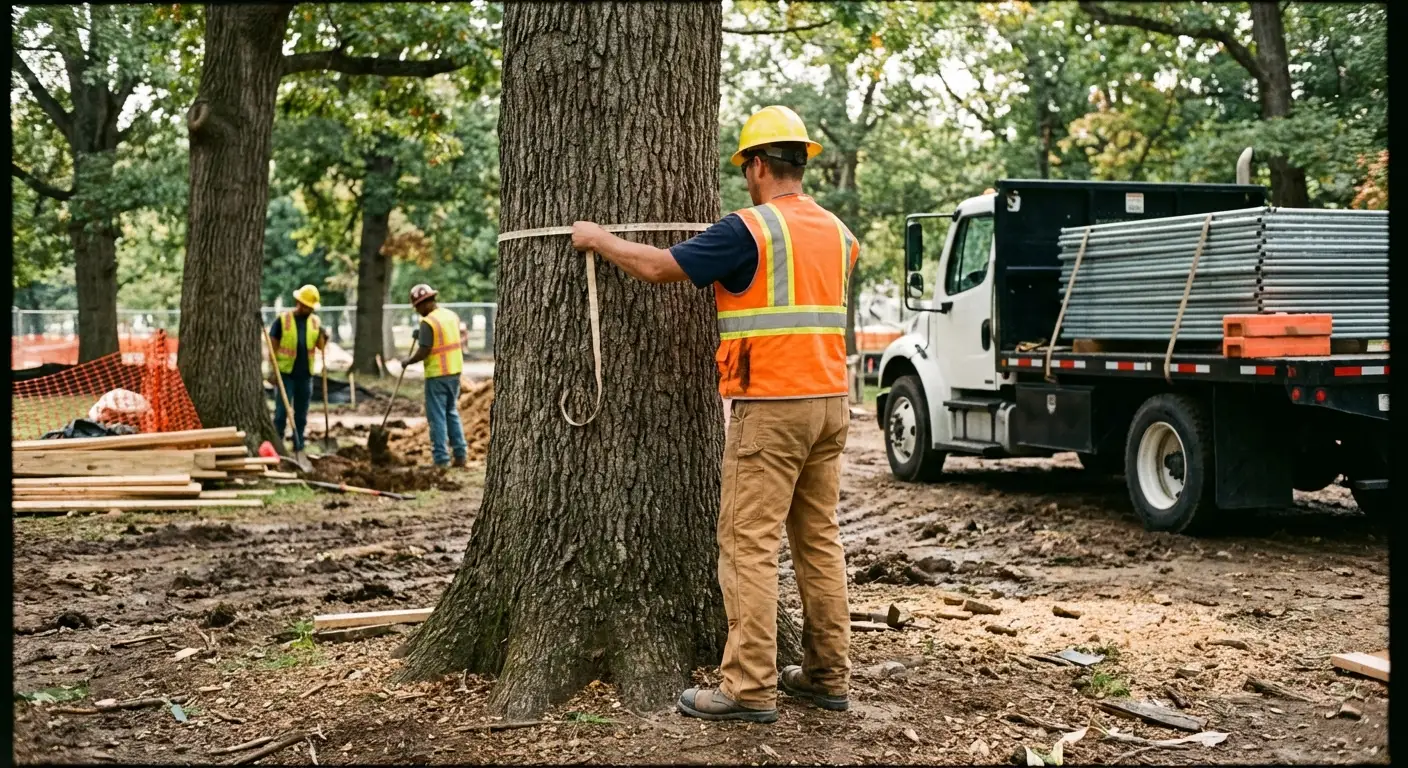
TPZ Fencing Compliance and Root Zone Standards
Technical specifications for establishing Tree Protection Zones near Dunwoody Nature Center to prevent root damage during site construction activities.
| Critical Root Zone (CRZ) Radius | $150-$300 per tree |
|---|---|
| Tree Protection Zone (TPZ) Fencing | $450-$850 per installation |
| Root Pruning Assessment | $200-$500 per unit |
| Soil Compaction Testing | $300-$600 per site |
| Permit Compliance Documentation | $250-$400 per filing |
| Arborist Consultation (Dunwoody) | $175-$350 per hour |
| Signage Interval | Every 30 linear feet |
Root Zone Calculation for TPZ Fencing Compliance
Ensure Dunwoody, GA fencing meets TPZ root zone requirements.
Common Mistakes We See in Root Zone Calculation for TPZ Fencing
We’ve stood on muddy lots in Dunwoody after a hard rain, tape in one hand and a root map in the other, because TPZ fencing only works when the root zone math matches the tree on site and the work in front of us.
Measuring the trunk and calling that the protected zone
That’s the mistake we see most often on tight Dunwoody lots. A trunk-only estimate shrinks the real root zone, so crews set tree protection zones too close, compact feeder roots, and leave a mature oak stressed long after the fence comes down.
We measure the critical root zone from the trunk with the proper tree method, then lay out tree protection ordinances and fence spacing before the first panel goes up.
Ignoring grade changes, drainage, and the real work path
On sloped ground near Dunwoody Forest, the fence line can look right from the street and still fail once equipment starts moving. Water runs, soil shifts, and tracked-in mud pushes crews into the protected area, which turns a clean calculation into root damage and an inspection headache.
We walk the site after rain if we can, mark runoff, then pair emergency fencing with dust control mesh where the tree zone needs extra protection.
Using the same setback for every tree on the property
That shortcut causes trouble around older trees in Dunwoody Village and the rare pre-1920 remnants we still see tucked behind properties. Young ornamentals, medium hardwoods, and large legacy trees all carry different root extents, so one blanket distance either wastes space or cuts too close.
We size each zone tree by tree, then tie the layout to surveying vs fencing so the boundary reflects the actual canopy spread and trunk size on that lot.
Forgetting to account for fence type and anchor pressure
A rigid panel line with poor footing can crush surface roots when workers set posts or drag materials through the zone. We’ve seen that happen around Stage Door Theatre work areas where access stayed tight and nobody planned for the weight of posts, bases, and gate hardware.
We choose lighter layouts and concrete steel bases or chain-link panels where the site needs less ground disturbance.
Skipping a real crew path and access check
A fence can meet the math and still fail in practice if the crew has to cross the TPZ every few minutes. That’s when bucket tracks, stacked materials, and hurried foot traffic keep pressing the same roots, especially on active builds in Dunwoody West.
We map gates, staging, and walking lanes first, then add zero trip hazard details and wheel assisted gates to keep movement outside the protected area.
Root Zone Fencing That Respects Dunwoody's Trees and History
Since 2008, we've specialized in TPZ fencing that protects both trees and construction timelines. Our approach balances strict compliance with practical solutions—whether we're working around Dunwoody High School's landmark oaks or preserving Kingswood's mature canopy. We've learned that proper root zone calculation isn't just about avoiding fines; it's about leaving the landscape healthier than we found it.
-
Measure Twice, Fence Once
We start every TPZ fencing job by verifying the tree's diameter at breast height (DBH) with calibrated calipers, then calculating the exact root protection radius required by Dunwoody's urban forestry code.In PracticeA 24-inch oak in Dunwoody Village needs a 12-foot protected zone.
-
Flexible Anchoring
Our crew uses concrete-free bases near sensitive root systems, switching to ground screws when we hit utility lines in older neighborhoods like Springfield.In PracticeAvoided damaging century-old pecan roots near Dunwoody High School last spring.
-
Zone Layering
We mark the inner TPZ with biodegradable paint, then offset the actual fence line by 18 inches to create a buffer—critical for historic properties with vernacular landscapes.In PracticeProtected a pre-1920 farmhouse's magnolia during Kingswood subdivision work.
-
Dynamic Adjustments
When storms roll in from Dunwoody Forest, we reinforce TPZ fences with wind-rated panels without compromising the protected root area.In PracticeSaved six water oaks during last October's microburst.
Every fence we install honors the tree's needs first.
Root Zone Calculation for TPZ Fencing: Compliance Guide
Guidelines for calculating root protection zones in Dunwoody, ensuring TPZ fencing meets local standards and preserves tree health.
What is the purpose of TPZ fencing in Dunwoody West?
TPZ fencing protects tree root zones during construction, preventing soil compaction and root damage near residential areas like Dunwoody West.
How is the root protection zone calculated for trees near the Spruill Center for the Arts?
The root protection zone radius typically equals 1 to 1.5 feet per inch of trunk diameter, ensuring roots near the Spruill Center remain undisturbed.
Are there specific regulations for TPZ fencing in Dunwoody Village?
Dunwoody Village follows city zoning and environmental regulations requiring TPZ fencing around heritage trees, especially near pre-1920 buildings.
What materials are recommended for TPZ fencing in Springfield's commercial areas?
Durable metal mesh or chain-link fences with clear signage are preferred in Springfield to withstand frequent site activity and comply with safety standards.
How far from a tree trunk should TPZ fencing be installed in residential neighborhoods?
Fencing should be placed beyond the drip line or calculated root zone, usually 8 to 15 feet, depending on species size, especially in Dunwoody West.
Who enforces TPZ fencing compliance in Dunwoody construction sites?
City inspectors from Dunwoody’s planning department monitor TPZ fencing installation during site reviews to ensure protection near historical sites.
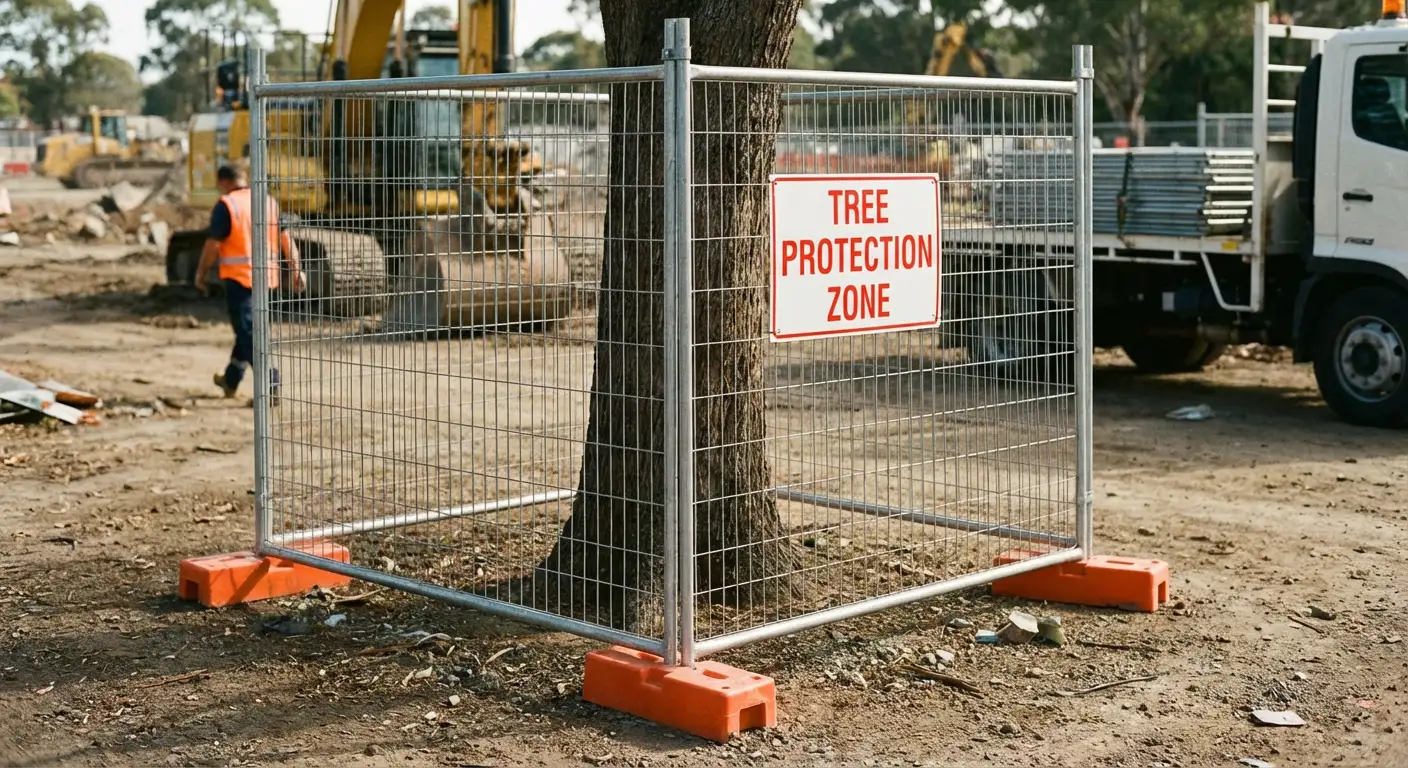
Root Zone Calculations for TPZ Fencing Compliance
Use root zone measurements to place TPZ fencing, protect trees, and meet site compliance requirements in Dunwoody, GA.
Serving Dunwoody, GA projects with compliance-focused temporary fencing support.